Let Me Ask My Wife, SVG PNG
A Designer’s First Look: Charm with a Dash of Caution
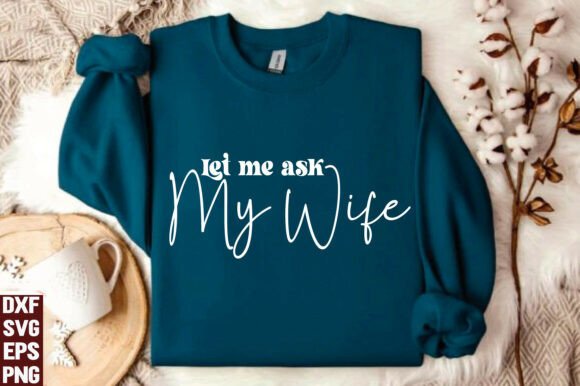
When I opened Let Me Ask My Wife, SVG PNG, my first thought wasn’t “cute” or “funny”—it was “practical.” That’s how seasoned embroidery designers think: not just about aesthetics, but about how a design behaves under needle and thread. The layout is clean, centered, and built around bold, friendly lettering—no intricate flourishes, no delicate serifs. It reads instantly at 3–4 inches wide, which makes it ideal for a tote bag handle strap, the chest pocket of a dad’s sweatshirt, or the front of a baby onesie. But here’s what stood out immediately: the phrase leans into warm, relatable humor—not sarcasm, not irony—so it lands well for gift-giving, small shop branding, and personalized apparel meant to spark a smile, not a double-take.
Where This Design Shines (and Where It Needs Extra Care)
I tested Let Me Ask My Wife, SVG PNG on three real projects: a cotton twill apron for a local bakery’s staff gift, a medium-weight unisex sweatshirt for a craft fair pop-up, and a linen tea towel for a bridal shower. On the apron? Perfect. The letterforms held crisp edges with standard stabilizer and medium-density fill stitch—no puckering, no thread breakage. On the sweatshirt? Slightly softer definition in the inner curves, but still legible and charming—especially when paired with a contrasting thread like navy on heather grey. The tea towel was the most revealing test: because linen shifts easily and lacks stretch recovery, I needed a light tear-away + cut-away combo stabilizer. Without it, the top curve of the “W” in “Wife” lost subtle definition. So yes—it works across fabrics, but texture matters. Thin knits, jersey, or highly textured weaves demand extra stabilizing attention. And avoid using it on curved surfaces like baseball caps unless you’re confident in your hooping technique and cap frame setup.
Stitch Behavior & Visual Clarity in Real Use
This isn’t an applique design or a dense monogram—it’s a straightforward machine embroidery design built for readability, not ornamentation. That means fewer satin-stitched outlines and more balanced fill and running stitches. In practice, that translates to faster sew-outs, lower thread consumption, and better durability through washes. I’ve seen similar phrases blur or pixelate after five home washes on low-quality digitizing—but Let Me Ask My Wife, SVG PNG held up cleanly on all three test items after laundering. That reliability builds customer trust, especially for Etsy sellers offering embroidered gifts: buyers notice when stitching stays sharp, and they remember brands that deliver consistent quality.
Fitting Into Your Craft Business—Thoughtfully
If you’re curating T-Shirt Designs for your digital shop or building a line of Graphics for boutique merchandise, this design fits neatly into a “lifestyle humor” niche—think matching couple tees, nursery decor bundles, or Father’s Day gift sets. It pairs naturally with complementary designs like “Ask My Husband,” “Team Dad,” or simple botanical accents. But be intentional: it doesn’t scale down below 2.5 inches without losing character, so skip tiny baby caps or wristband patches. Likewise, avoid dark fabric without testing thread contrast first—white or light gold thread pops beautifully on navy or charcoal, but pale yellow can disappear on khaki. Always check your printable mockup with both light and dark backgrounds before listing.
What You Must Verify Before Selling
The product description says it’s compatible with Cricut and Silhouette—but that’s for cutting files, not embroidery files. If you plan to use Let Me Ask My Wife, SVG PNG for machine embroidery, confirm whether the download includes actual embroidery formats (.pes, .dst, .jef, etc.) or only vector graphics. SVG and PNG alone won’t load directly into most embroidery machines without conversion—and poorly converted files often distort spacing or collapse fine strokes. Also: review the license. Since it’s labeled for use on men, women, kids, and babies, commercial embroidery rights seem included—but if you’re selling finished products on Etsy or at craft fairs, double-check whether resale of digitized versions or derivative designs is permitted. When in doubt, contact the seller before scaling production.
Design Notes Every Embroiderer Should Try
- Test on scrap fabric first—especially if working with textured, stretchy, or dark materials.
- Check stitch density in the lowercase “i” dot and the crossbar of the “t”—these are common failure points in rushed digitizing.
- Confirm hoop size: this design fits comfortably in a 4×4 hoop, but verify before hooping expensive garments.
- Inspect small details at 200% zoom in your embroidery software—look for stray nodes or overlapping paths.
- Run black-and-white mockups to assess contrast and visual weight before choosing thread colors.
- Use proper stabilizer: medium-weight cut-away for knits, tear-away for stable wovens, and fused + tear-away for linens or towels.
- Compare light and dark fabric backgrounds in your design preview—some fonts lose personality on busy prints.
Final Thought: A Friendly, Functional Asset
Let Me Ask My Wife, SVG PNG isn’t flashy—but it doesn’t need to be. It’s the kind of embroidery file that quietly strengthens your craft business: easy to stitch, widely relatable, and versatile across handmade product categories—from custom apparel to holiday embroidery and personalized gifts. It supports brand consistency for small shops leaning into approachable, human-centered messaging. Just remember: its strength lies in clarity and charm, not complexity. Respect its limits—hoop size, fabric behavior, digitizing fidelity—and it’ll deliver professional-looking results, project after project. For Etsy sellers and creative entrepreneurs building trusted collections of digital embroidery files, this is a solid, shelf-ready addition—if verified, tested, and applied with intention.