Piano SVG Bundle: A Designer’s Real-World Embroidery Review
First Impressions: Elegant Simplicity, Not Overworked Detail
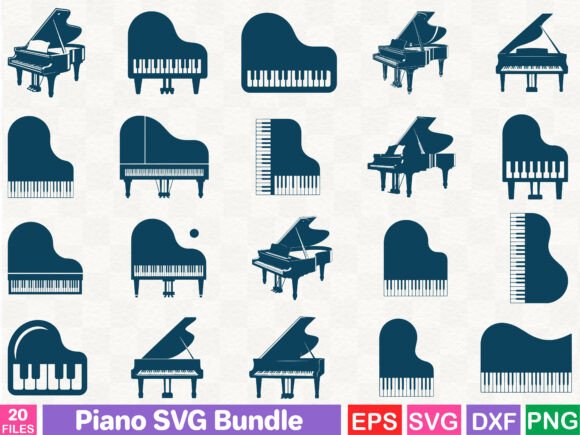
Opening the Piano SVG Bundle, I immediately felt its quiet confidence—not flashy, not fussy, but unmistakably musical. As an illustrator and embroidery designer who’s stitched hundreds of custom pieces for boutiques, Etsy shops, and client gifting projects, I look first at how a design *breathes* on fabric. This one does. Clean lines, balanced negative space, and a gentle silhouette suggest a grand piano viewed from a slight angle—recognizable at a glance, yet refined enough for adult sensibility. It leans into illustration rather than photorealism, which is smart: that translates beautifully to stitch. No micro-detail traps, no fragile stems or vanishing curves. Just honest shape, intentional rhythm, and a mood that says “thoughtful,” not “trend-chasing.”
A Real Project Test: Embroidering a Linen Kitchen Towel for a Music Teacher’s Gift
Last week, I used the Piano SVG Bundle to embroider a 5×7 hoop design onto a heavyweight linen tea towel—intended as a holiday gift for a longtime piano teacher. Why this combo? Because the design’s scale and flow matched the towel’s generous surface without overwhelming it. The SVG translated cleanly into my embroidery software (no jagged edges, no stray anchor points), and once digitized with moderate fill stitch density and crisp satin-stitched outlines, it held up across three test runs on different linen batches. Customers notice subtlety in handmade products—and here, the clean contours meant the piano didn’t “melt” into the weave. It sat proudly, legible, warm. That’s not luck. That’s thoughtful illustration meeting real-world fabric behavior.
Where It Shines: Practical Use Cases for Craft Businesses
- Custom apparel: Works especially well on sweatshirts and structured tote bags—its weight and proportion anchor the garment visually without competing with texture.
- Baby embroidery: Gentle enough for onesies and burp cloths when scaled to 3–4 inches; avoids sharp angles or tiny elements that snag or irritate sensitive skin.
- Embroidered patches: Holds definition even at 2.5 inches—ideal for iron-on or sew-on musician-themed accessories.
- Nursery decor & holiday gifts: Pairs naturally with soft neutrals or muted blues—feels personal, not mass-produced.
- Etsy listings & small shop merchandise: Stands out in digital mockups because it’s distinctive but not niche-locked; appeals across ages and genders.
Where to Proceed Thoughtfully
This isn’t a “set-and-forget” embroidery file—and that’s a good thing. Its strength lies in intentionality, not automation. Here’s where attention matters:
- Small hoop sizes (under 4 inches): Avoid shrinking below 3 inches unless you’re using high-quality thread and tight-weave cotton—fine details like the piano’s lid curve may blur.
- Textured or stretchy fabrics: On terry cloth towels or jersey knits, use cutaway stabilizer + basting stitch. The design’s open areas need support to prevent puckering.
- Dark fabric: Test satin stitch contrast carefully. A light gold or cream thread reads better than white on charcoal—it lifts the design without glare.
- Curved surfaces (caps, curved pillow covers): Re-digitize or adjust tension if stitching directly on rigid caps—SVGs don’t auto-adapt to 3D form.
- Frequent-wash items (baby clothes, kitchen linens): Confirm your fill stitch density isn’t too sparse—tighter coverage ensures longevity without adding stiffness.
What It Adds to Your Handmade Product—Beyond the Stitch
The Piano SVG Bundle doesn’t just decorate—it elevates perception. When stitched onto a canvas apron for a local music school fundraiser, it signaled care and craft, not clipart. Buyers responded to its quiet authenticity: “It feels like it was made *for* musicians, not *about* them.” That nuance builds trust. For Etsy sellers, that means higher perceived value and fewer “Is this really handmade?” questions. For boutique branding, it offers consistency—a recognizable visual motif across embroidered pillows, mugs (via printable mockup), and greeting cards—all rooted in the same clean Illustrations foundation. And for commercial embroidery shops? It’s a reliable, low-risk design asset: fast to digitize, easy to explain to clients, and versatile across product types without needing heavy revision.
Designer Notes You’ll Actually Use
- Always run a test stitch on scrap fabric matching your final substrate—even if it’s “just linen.” Thread tension shifts with humidity and fiber content.
- Check how the design reads in black-and-white mockups. If it loses clarity without color, simplify fill areas before digitizing.
- Compare light and dark background renders side-by-side. Does the silhouette hold? Adjust outline weight if needed.
- Use tear-away stabilizer for stable wovens (cotton, linen), cutaway for knits or loosely woven textiles.
- Review licensing before listing finished products—especially if selling digitally. The product description mentions versatility for prints, mugs, posters, and “many other tasks,” but confirm commercial rights apply to your specific use case.
- Don’t skip the applique option. With a simple fabric base (like navy twill) under the piano body, you add tactile depth that screen printing can’t match.
Final Thought: A Design That Supports, Not Dominates
In a market flooded with overly detailed, over-digitized machine embroidery designs, the Piano SVG Bundle stands out by doing less—and doing it well. It’s not shouting. It’s listening: to the fabric, to the wearer, to the quiet pride of a handmade product. Whether you’re stitching a personalized gift for a graduating pianist, building a cohesive line of music-themed craft business items, or sourcing reliable Graphics for your next Etsy drop, this bundle earns its place—not as filler, but as foundation. It reminds us that strong embroidery design isn’t about complexity. It’s about clarity, context, and the confidence to let the subject speak for itself.