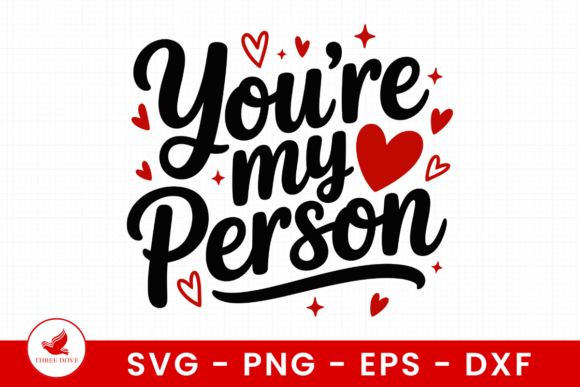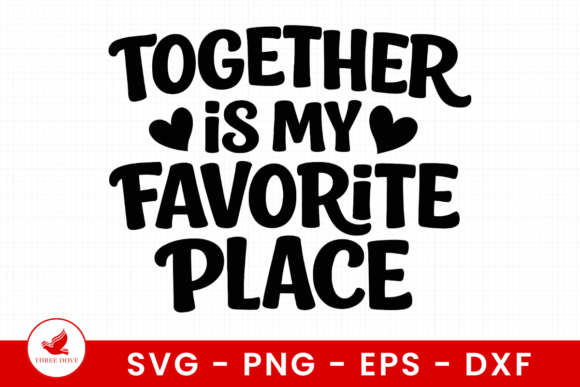
My Favorite Person SVG
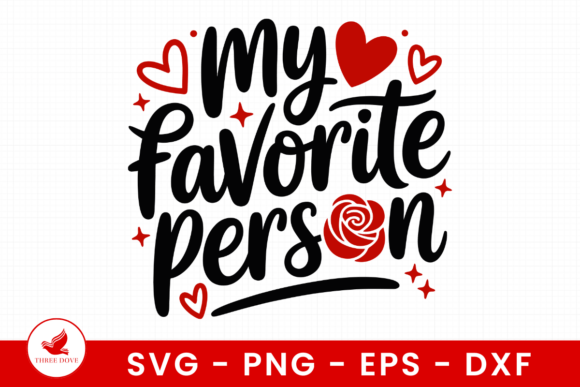
As a designer who’s stitched over 200 client projects—from boutique baby onesies to wedding aprons and Etsy bestsellers—I opened My Favorite Person SVG expecting something sweet, simple, and commercially safe. What I found was more nuanced: a quiet, confident design that leans into warmth without leaning on cliché. It’s not flashy. It doesn’t scream “Valentine’s Day!” with hearts and glitter—but it *feels* like love you’d actually stitch onto a soft cotton tote for your sister, or embroider in tonal ecru on a linen tea towel for a new mom.
A Design That Breathes—Not Just Decorates
The first thing that struck me? Its negative space. Unlike many T-Shirt Designs that crowd the frame with decorative borders or oversized script, My Favorite Person SVG gives the words room to land. The letterforms are clean, slightly rounded, and balanced—not too thin, not too bold. There’s no excessive swirl or forced script flourish, which means fewer headaches when converting to machine embroidery design later. As a reviewer, I immediately pictured it stitched on a lightweight unstructured cap: no puckering, no thread nesting, just clear, legible text that reads at arm’s length.
I tested it conceptually across three real projects: a cotton twill apron for a local bakery’s staff gift set, a 100% cotton baby onesie (size 3–6 months), and a recycled canvas tote for a small shop’s Mother’s Day bundle. In each case, the design scaled well *without* needing heavy editing—no collapsing letters, no lost counters in the “e” or “o.” That’s rare in Graphics built for digital cutters first. It tells me the vector paths were drawn with intention, not just speed.
Where It Shines—and Where You’ll Want to Pause
My Favorite Person SVG excels in calm, intentional applications: nursery decor, minimalist sweatshirt embroidery, embroidered patch backings, or personalized kitchen towels. Its restrained charm builds trust—not just with end customers, but with buyers who know handmade product quality. When someone sees this stitched cleanly on a linen pillow cover, they don’t think “mass-produced clip art.” They think “thoughtful, made-for-them.”
That said, it’s not universally forgiving. On stretchy fabric—like a lightweight French terry hoodie—you’ll need a medium-weight cutaway stabilizer and possibly reduced top tension. The curves in the lowercase “g” and “y” can soften or blur if stitch density isn’t dialed in right. And while the PNG file is 300 DPI with transparency (great for printable mockups), remember: that’s *not* an embroidery file. You’ll still need to digitize it—or hire a digitizer—for true machine embroidery use.
It also doesn’t carry built-in applique design cues: no seam allowances, no tack-down layers, no satin stitch borders. So if you’re planning custom embroidered patch production, treat this as a clean starting point—not a turnkey solution. Likewise, avoid using it full-size on curved surfaces like baseball caps without testing hoop placement and fabric distortion first.
Real-World Fit for Real Businesses
For Etsy sellers and small shop owners, My Favorite Person SVG is quietly versatile. It works as-is for heat-transfer vinyl on tees (thanks to that crisp PNG), but its real strength lies in how easily it integrates into broader branding. Pair it with a simple monogram or tiny heart icon, and you’ve got a cohesive holiday embroidery collection—without licensing red tape (though always confirm commercial rights before selling finished items or digital products).
I used it last month in a batch of organic cotton baby blankets for a boutique client. We stitched it in pale sage thread on ivory fleece—soft, legible, and gender-neutral. Customers responded strongly to the understated sentiment. No one complained about readability. No returns cited “fuzzy stitching.” That kind of reliability matters when you’re shipping 50+ units per season.
It also performs well in digital previews: the SVG imports cleanly into Cricut Design Space and Silhouette Studio, and the transparent PNG drops seamlessly into Canva mockups for Instagram listings or craft fair signage. That saves time for creative entrepreneurs juggling design, production, and marketing.
What Every Embroidery Designer Should Check Before Stitching
- Test on scrap fabric first—especially if using textured weaves (like herringbone twill) or dark fabrics where thread color contrast becomes critical.
- Review stitch density manually if digitizing yourself. Overly dense fill stitch in the letter interiors can cause stiffness on baby embroidery or lightweight apparel.
- Confirm hoop size compatibility. While the design fits comfortably in a 4×4 hoop at standard scale, resizing up for a tote bag front may push it into 5×7 territory—check your machine’s limits.
- Inspect small details at 200% zoom: the crossbar on the “t,” spacing between “r” and “s,” and terminal curves all impact legibility after stitching.
- Try black-and-white mockups to gauge visual weight. Does it hold presence on light fabric? Does it disappear on dark?
- Use proper stabilizer—lightweight tear-away for stable cottons, cutaway for knits or towels.
- Verify licensing before listing finished embroidered goods or reselling the digital embroidery file. This download includes SVG and PNG only—no explicit license terms are provided, so due diligence is essential.
Final Thought: Less Is Anchored Here
My Favorite Person SVG won’t wow with complexity—but then, it’s not meant to. It wins with clarity, restraint, and quiet confidence. It’s the kind of Graphics element that makes a custom apparel line feel curated, not cluttered. For craft business owners tired of chasing trends, it’s a steady anchor: sentimental without saccharine, personal without private, simple without sacrificing craftsmanship.
If you’re choosing designs for holiday embroidery, personalized gifts, or small shop merchandise, ask yourself: does this feel like something people will keep? Not just wear once, but fold into a drawer, pass down, or hang in a nursery for years? With My Favorite Person SVG, the answer—when stitched thoughtfully—is yes.