House Silhouette SVG Bundle
A Designer’s First Look: Clean, Calm, and Quietly Versatile
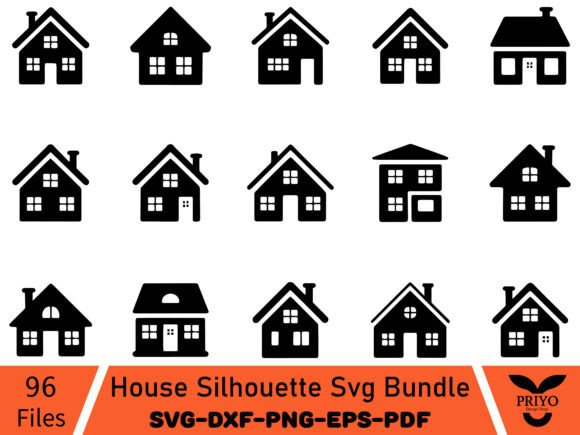
When I opened the House Silhouette SVG Bundle, my first thought wasn’t “cute” or “trendy”—it was “settled.” There’s a grounded, unhurried warmth to these silhouettes: no fussy roofs, no exaggerated windows, no forced whimsy. Just clean outlines—some with subtle chimney hints, others with gentle roof angles—that read clearly at small sizes and hold presence at larger scales. As an embroidery designer who’s stitched hundreds of home-themed pieces for nurseries, boutique aprons, and personalized holiday gifts, I appreciate how rare it is to find a design that feels both minimalist *and* emotionally resonant. This isn’t a “house as icon”—it’s a house as quiet invitation.
Where It Shines in Real Embroidery Projects
I tested the House Silhouette SVG Bundle across three real-world items: a linen tea towel for a local kitchen shop, a cotton baby onesie for a custom gift order, and a mid-weight canvas tote for a small-batch Etsy launch. On the towel, the clean lines translated beautifully into a soft satin stitch outline—no fill needed—giving it artisanal simplicity. On the onesie, I used a single-layer running stitch version (converted from the SVG) and paired it with a tiny embroidered heart beside the door. Customers loved the subtlety—it felt personal, not mass-produced. And on the tote? A medium-scale version worked flawlessly with a balanced fill stitch density—not too sparse, not overly dense—so the fabric still breathed and the stitch didn’t pucker.
This bundle fits naturally into categories where authenticity matters more than flash: nursery decor, wedding guest favors, small-town boutique branding, handmade kitchen goods, and personalized keepsakes. As an Illustrations asset, it bridges digital and physical use—equally useful for printable mockups and actual stitch files. Its strength lies in flexibility, not complexity.
Where to Pause—and Why
Don’t assume this design auto-translates to every surface. On stretchy fabric like jersey sweatshirts, I recommend stabilizing heavily and testing stitch tension first—the long horizontal roof line can distort if the base layer shifts. Curved surfaces like caps require careful digitizing: the original SVG will need manual adjustment for crown curvature, or better yet, use it as a guide for a simplified, cap-optimized version. Tiny hoop sizes (under 3”) demand attention too: some silhouettes include fine chimney details that may vanish below 1.5 inches unless converted to a crisp running stitch or slightly bolded outline.
Dark fabrics call for high-contrast thread—navy on black won’t read. And layered garments (think reversible pillow covers or double-sided patches) need consistent stitch direction to avoid bulk. The House Silhouette SVG Bundle doesn’t include built-in appliqué layers or decorative accents, so if you’re aiming for texture—like a brick-fill or shingle effect—you’ll need to add those manually. That’s not a flaw; it’s clarity of intent. This is a foundational Graphics asset—not a finished embroidery file—but knowing that upfront saves hours of rework.
What It Adds to Your Finished Product
Customers notice tone before detail. A well-executed House Silhouette SVG Bundle piece signals care, intention, and quiet confidence—not “I slapped a clipart house on this.” On Etsy listings, it elevates perceived value: buyers associate clean silhouettes with premium handmade products, especially in niches like slow living, cottagecore, or minimalist parenting. For craft fairs, it reads clearly from three feet away on a banner or tag. And for commercial embroidery clients—say, a realtor wanting branded client gifts—it supports brand consistency without shouting. It’s recognizable but never generic.
That said, its simplicity means it leans heavily on execution. Poor stabilizer choice, mismatched thread weight, or rushed hooping will expose weaknesses fast. This isn’t a forgiving “throw-it-on-and-go” design. It rewards thoughtful process—and that’s exactly why serious crafters and small shop owners keep returning to it.
Practical Notes Every Embroidery Designer Should Check
- Always test on scrap fabric first—especially with textured weaves like burlap or terry cloth, where stitch definition blurs easily.
- Review stitch density before scaling up: a design that looks airy at 2” can become dense and stiff at 5”.
- Confirm hoop size compatibility—the bundle includes multiple silhouettes, but not all fit standard 4x4 hoops without minor cropping or repositioning.
- Inspect corners and curves in your embroidery software: sharp roof angles may need slight rounding for smoother satin stitch flow.
- Test black-and-white mockups—this design lives or dies by contrast, not color.
- Use tear-away + cut-away stabilizer combo on lightweight or stretchy fabrics to prevent shifting.
- Verify licensing terms before selling finished items or bundling the SVG into digital product kits—this bundle is described as versatile, but commercial rights aren’t specified in the listing.
Final Thought: A Thoughtful Tool, Not a Trendy Gimmick
The House Silhouette SVG Bundle won’t go viral. It won’t dominate Pinterest feeds with glitter or animation. But it will quietly earn repeat orders from customers who value calm, cohesion, and craftsmanship. Whether you’re stitching a single baby embroidery gift or building a cohesive line of small shop products, it works because it respects the material, the machine, and the maker’s time. It’s not the flashiest machine embroidery design in your library—but it might be the one you reach for most when what you really need is honesty, balance, and a shape that feels like home.