German Shepherd Dog Silhouette SVG
A Designer’s First Look: Clean, Confident, and Craft-Ready
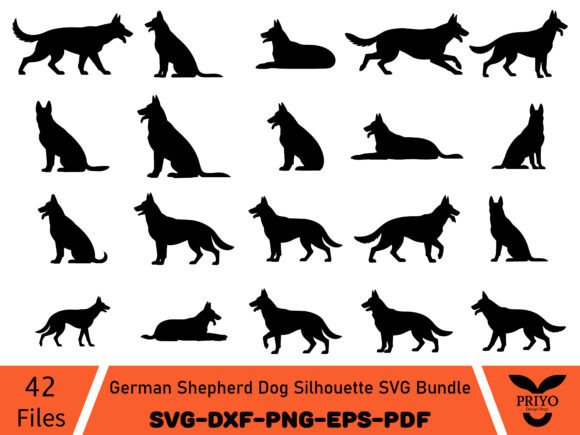
When I opened the German Shepherd Dog Silhouette SVG for the first time, I didn’t see just another dog outline—I saw a quiet confidence in its posture. The silhouette holds its head high, ears forward, back slightly angled—true to breed standard, but without overcomplication. It’s not fussy. No tiny collars, no exaggerated fur texture, no decorative flourishes. That’s a strength, not a limitation. For embroidery designers and craft business owners, this kind of restraint is gold: it translates cleanly into stitch, scales predictably across fabric types, and reads instantly—even at 3 inches tall on a baby onesie or 8 inches wide on a tote bag.
Real Project Test: Embroidering a Custom Nursery Pillow Cover
Last week, I used the German Shepherd Dog Silhouette SVG to create a personalized pillow cover for a client’s nursery—a soft gray linen blend with tonal gray thread. I chose a medium hoop size (5x7") and paired it with a lightweight cutaway stabilizer. What stood out immediately was how well the shape held integrity during stitching: clean curves, no jagged edges, no micro-details that bunched or skipped. The silhouette’s negative space worked beautifully—it let the fabric breathe, avoided dense fill-stitch fatigue, and gave the finished piece a calm, intentional feel. Parents responded strongly—not just to the dog, but to the *clarity* of the design. That matters. In handmade product markets, especially for sentimental items like nursery decor or holiday gifts, simplicity with presence builds trust faster than busy graphics ever could.
Where This Silhouette Shines—and Where It Needs Thought
The German Shepherd Dog Silhouette SVG performs exceptionally well across custom apparel and small-batch merchandise. On sweatshirt embroidery? Yes—its bold contour cuts through fleece texture without needing heavy underlay. On embroidered patches? Absolutely—clean outer edge means crisp heat-seal or sew-on application. As a tote bag design or apron accent? It anchors the composition without overwhelming. Even as an applique design, its single-layer shape makes placement intuitive and trimming efficient.
But here’s where attention matters: avoid using it on highly textured fabrics (like bouclé or thick terry) without testing stitch density first. On stretchy knits, stabilize generously—especially along the spine curve. And while it reads clearly on dark fabric with light thread, don’t assume contrast carries automatically; always test black-and-white mockups before finalizing your thread colors. Also, skip tight corners on curved surfaces—like the front of a structured cap—unless you’re willing to split the design or reduce scale. Tiny lettering or decorative borders aren’t part of this file, and that’s fine. Its value lies in being a focused, reliable machine embroidery design—not a cluttered all-in-one pack.
Design Integrity Meets Commercial Practicality
As an Etsy seller and small shop product developer, I pay close attention to how a digital embroidery file affects perceived value. The German Shepherd Dog Silhouette SVG elevates handmade presentation because it looks professionally edited—not auto-traced, not pixelated, not oversimplified into abstraction. Customers notice that difference in photos and in person. It supports brand consistency too: whether you’re building a pet-themed boutique line or offering personalized gifts for German Shepherd lovers, this silhouette feels cohesive across tea towels, blanket corners, and holiday stockings.
It also encourages repeat engagement. I’ve seen customers return for matching sets—pillow + mug wrap + baby bib—because the core graphic is strong enough to unify disparate products without feeling repetitive. That’s rare in generic Illustrations or Graphics bundles. This isn’t wallpaper. It’s a signature element.
Practical Notes Every Embroidery Designer Should Keep Handy
- Always test on scrap fabric first—especially if using textured, stretchy, or dark materials.
- Review stitch density visually before sending to your machine; low-density fill stitch works best here, not heavy satin stitch.
- Confirm hoop size compatibility—the file may scale well, but check maximum dimensions before resizing for caps or baby hats.
- Inspect small details manually: look for stray anchor points or unintended overlaps in the vector path—SVG files can sometimes carry hidden artifacts.
- Test both light and dark thread on contrasting backgrounds—what reads boldly on white linen may disappear on charcoal fleece.
- Use proper stabilizer—cutaway for knits, tear-away for stable wovens, and consider topping for napped fabrics.
- Verify licensing terms before selling finished products or bundling the file in digital embroidery kits—this bundle doesn’t state commercial use rights outright, so confirm before scaling your craft business.
Final Thought: A Workhorse, Not a Gimmick
The German Shepherd Dog Silhouette SVG isn’t flashy—but then, the best embroidery file rarely is. It’s balanced, scalable, respectful of fabric behavior, and emotionally resonant without leaning on cliché. Whether you’re prepping a batch of personalized gifts for a craft fair, designing small shop merchandise, or creating a custom embroidered patch for a rescue fundraiser, this design delivers quietly and consistently. It fits naturally into real workflows—not just as a Graphics download, but as a trusted part of your embroidery project toolkit. And in a market flooded with overdesigned, under-tested files, that reliability is worth more than any extra flourish.